

Programmatic Advertising Explained Unlocking Digital Ad Success
- Justin Gleo

- Mar 10, 2025
- 8 min read
Programmatic advertising is transforming the digital marketing landscape. It automates the buying and selling of ad space.
This method ensures precise targeting and efficient budget use. In this blog post, we will break down the concept of programmatic advertising. You'll learn how it works, its benefits, and why it's important. Understanding programmatic advertising can boost your marketing efforts.
It offers real-time data and better audience reach. Unlike traditional methods, it uses algorithms and AI to optimize ads. This leads to higher engagement and better ROI. Join us as we explore this powerful advertising strategy. Discover how it can change your approach to digital marketing. Let's dive into the world of programmatic advertising together.

Introduction To Programmatic Advertising
Programmatic advertising is a powerful tool in the digital marketing world. It uses automated technology to buy and sell online ads. This process makes ad buying faster and more efficient. Businesses can reach their target audience more precisely.
What Is Programmatic Advertising?
Programmatic advertising refers to the use of software to purchase digital ads. This method replaces traditional human negotiations with computer algorithms. There are different types of programmatic advertising:
● Real-Time Bidding (RTB)
● Private Marketplaces (PMP)
● Programmatic Direct
Real-Time Bidding is the most common type. It allows advertisers to bid for ad space in real-time. The highest bid wins the ad space. This process happens in milliseconds.
Importance In Digital Marketing
Programmatic advertising is crucial in digital marketing for several reasons:
● Efficiency: Automated buying saves time and resources.
● Precision: It targets ads to specific audiences.
● Scalability: Businesses can scale their ad campaigns easily.
● Performance: Data and analytics improve ad performance.
Programmatic advertising also helps in reducing ad fraud. It uses advanced algorithms to detect and prevent fraudulent activities. This ensures that your ad budget is spent wisely.
How It Works
Programmatic advertising works through several stages:
1. A user visits a website.
2. The website sends an ad request to an ad exchange.
3. Advertisers bid for the ad space in real-time.
4. The highest bidder's ad is displayed to the user.
This entire process occurs in milliseconds. It ensures that the right ad reaches the right person at the right time.
How Programmatic Advertising Works
Understanding how programmatic advertising works can seem complex. It involves various automated processes that make buying and selling ads more efficient. Let's break it down and see how it all fits together.
Automation In Ad Buying
Programmatic advertising relies on automation to streamline the ad buying process. This means that software handles the buying, placement, and optimization of ad inventory. Advertisers no longer need to negotiate directly with publishers. Instead, they use platforms that automate these tasks.
Here are some key points about automation in ad buying:
● Efficiency: Automation reduces the time and effort needed for ad transactions.
● Precision: Ads are placed based on data, ensuring they reach the right
audience.
● Cost-effectiveness: It minimizes human error, asving money on ad spend.
Real-time Bidding
Real-time bidding (RTB) is a crucial component of programmatic advertising. It allows advertisers to bid for ad space in real-time. This process happens in milliseconds, as a web page loads.
Here's how RTB works:
1. A user visits a webpage.
2. The ad space on the page is auctioned off.
3. Advertisers bid on the ad space.
4. The highest bid wins, and the ad is displayed instantly.
Real-time bidding ensures that ads are shown to the most relevant audience. It also provides flexibility and control over ad spend. Advertisers can set their budgets and adjust bids based on performance data. In summary, programmatic advertising leverages automation and real-time bidding. These technologies make ad buying faster, more accurate, and cost-effective.
Key Components
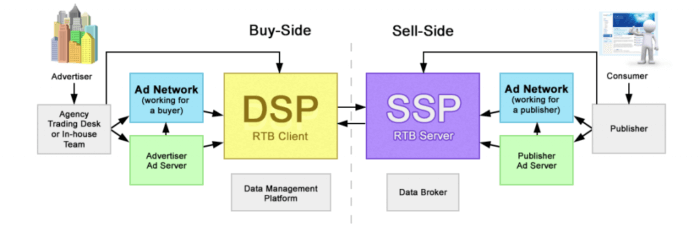
Understanding the key components of programmatic advertising is essential. These components work together to deliver effective digital ad campaigns. Let's break down the main parts: Demand-Side Platforms, Supply-Side Platforms, and Ad Exchanges.
Demand-side Platforms
Demand-Side Platforms (DSPs) allow advertisers to buy digital ad space. Advertisers use DSPs to manage their ad campaigns. They can set bids, target audiences, and optimize ad placements. DSPs connect advertisers with various ad exchanges. This connection helps advertisers reach their target audience efficiently.
Supply-side Platforms
Supply-Side Platforms (SSPs) assist publishers in managing and selling their ad inventory. Publishers use SSPs to maximize revenue from their available ad space. SSPs connect with multiple ad exchanges, offering ad space to potential buyers. This connection ensures that publishers get the best possible price for their inventory.
Ad Exchanges
Ad Exchanges act as digital marketplaces for buying and selling ad space. Both DSPs and SSPs participate in ad exchanges. They facilitate real-time bidding (RTB) for available ad inventory. This process ensures that ads are placed in front of the right audience. Ad exchanges make the entire process efficient and streamlined.

Benefits Of Programmatic Advertising
Programmatic advertising has become a cornerstone of digital marketing. It leverages automated technology to buy and place ads. This method offers numerous advantages to advertisers. Let's explore the key benefits of programmatic advertising.
Increased Efficiency
Programmatic advertising automates the ad buying process. This saves time and reduces manual effort. It allows marketers to focus on strategy rather than execution. Automated systems can handle large volumes of data. This ensures more accurate and timely ad placements.
Better Targeting
Programmatic advertising uses data to target audiences more precisely. Marketers can reach specific demographics and interests. This leads to more relevant ads for the audience. Better targeting improves engagement and conversion rates. It ensures that ads are shown to the right people at the right time.
Enhanced Transparency
Programmatic advertising offers greater transparency in ad buying. Marketers can track and measure ad performance in real-time. This provides insights into where ads are displayed and how they perform. Transparency helps in optimizing ad spend and improving ROI. Marketers can make informed decisions based on detailed reports and analytics.
Challenges And Limitations
Programmatic advertising offers many benefits. But it also has its challenges and limitations. Understanding these issues is crucial for effective use.
Ad Fraud
Ad fraud is a significant problem in programmatic advertising. Fraudsters create fake clicks and impressions. This wastes advertisers' budgets. It also reduces trust in the system. Using advanced detection tools can help. But fraudsters continually find new ways to cheat the system.
Privacy Concerns
Privacy concerns are growing. Users worry about how their data is used. Programmatic advertising relies on user data. This data helps target ads more precisely. But it also raises privacy issues. Stricter regulations and better practices are needed. These ensure user data is protected.
Technical Complexity
Programmatic advertising involves complex technology. Setting up and managing campaigns can be challenging. This requires specialized skills and knowledge. Smaller businesses may struggle with this complexity. They may need to hire experts, which adds to costs. Simplifying processes could help more businesses benefit.

Best Practices
Programmatic advertising can be complex, yet highly effective. Following best practices ensures your campaigns deliver results and maximize ROI. This section covers essential best practices in programmatic advertising.
Choosing The Right Platforms
Selecting the correct platforms is crucial. Different platforms offer unique advantages. Consider your target audience and where they spend time online. Popular options include Google Display Network, Facebook Ads, and Amazon DSP. Each platform has its own strengths.
Platform | Strength |
Google Display Network | Wide reach and targeting options |
Facebook Ads | Detailed demographic targeting |
Amazon DSP | High purchase intent users |
Effective Ad Creatives
Ad creatives are the heart of your campaigns. They must grab attention and convey your message. Use high-quality images and clear, concise text. Tailor your ads to the platform's format. For example, vertical videos work well on mobile devices. Test different versions to see what resonates.
● Use compelling visuals
● Keep text short and impactful
● Align format with platform
● Test various creatives
Monitoring And Optimization
Monitoring and optimization are ongoing processes. Regularly check your campaign performance. Use analytics tools to track key metrics like impressions, clicks, and conversions. Adjust your strategies based on data. For example, if a certain ad format performs well, allocate more budget to it.
1. Track performance metrics
2. Analyze data regularly
3. Adjust strategies as needed
4. Allocate budget to high-performing ads
Effective optimization requires continual effort but pays off in higher ROI.
Case Studies
Programmatic advertising has transformed digital marketing with its efficiency and targeting precision. By examining case studies, we can see its real-world impact. Below are some examples of successful campaigns and the lessons learned from them.
Successful Campaigns
Case studies provide insight into the power of programmatic advertising.
Here are a few examples:
Brand | Campaign Goal | Results
|
Company A | Increase Brand Awareness | 50% rise in brand recall |
Company B | Boost Sales | 30% growth in sales |
Company C | Expand Reach | 40% increase in new users |
Lessons Learned
Successful campaigns offer valuable lessons for future strategies.
Here are some key takeaways:
● Target Audience: Precise targeting improves engagement and conversion rates.
● Data Utilization: Analyzing data helps refine ad strategies and optimize performance.
● Ad Formats: Different formats resonate with different audiences. Experimentation is crucial.
● Budget Allocation: Allocating budget wisely enhances ROI.
Effective programmatic advertising relies on these principles. Implementing these lessons can lead to better results and greater efficiency.
Future Of Programmatic Advertising
Programmatic advertising is growing fast. Its future looks promising. With advancements in technology, this method is becoming more efficient. Let's explore the emerging trends and the impact of AI and machine learning on programmatic advertising.
Emerging Trends
New trends are shaping programmatic advertising. One trend is the use of voice search. More people use voice assistants. Advertisers can target these users with tailored ads. Another trend is connected TV. More households have smart TVs. This opens new ad opportunities. Advertisers can show ads on streaming platforms. Personalization is another trend. Ads are becoming more relevant. They match user preferences and behaviors.
Impact Of Ai And Machine Learning
AI and machine learning are transforming programmatic advertising. AI helps in predicting user behavior. This makes ads more effective. Machine learning optimizes ad placements. It ensures the right ads reach the right audience. These technologies save time and reduce costs. They automate many tasks. Advertisers can focus on strategy. AI also improves ad creativity. It analyzes data to create engaging content. As technology evolves, programmatic advertising will keep advancing.
Frequently Asked Questions
What Is Programmatic Advertising?
Programmatic advertising automates the buying and selling of online ad space. It uses algorithms and data insights. This helps to target audiences more effectively.
How Does Programmatic Advertising Work?
Programmatic advertising works using real-time bidding. Advertisers bid for ad space based on user data. The highest bid wins and the ad is displayed instantly.
What Are The Benefits Of Programmatic Advertising?
Programmatic advertising offers precise targeting and real-time data analysis. It increases efficiency and reduces costs. It also improves ROI by reaching the right audience.
What Types Of Programmatic Advertising Exist?
Types include display ads, video ads, mobile ads, and social media ads. Each type targets specific platforms and audiences effectively.
Conclusion
Programmatic advertising offers efficiency and precision in digital marketing. It automates the ad buying process, saving time and money. Brands can target specific audiences with tailored messages. This method also provides valuable data for future campaigns. Embrace programmatic advertising to stay competitive and relevant. It's a smart way to reach your marketing goals. Start exploring its benefits today.
Let’s Build Your Success Together
Don’t wait for results to happen—create them. With URDigital Tech, you’re not just getting a service; you’re gaining a partner invested in your success.
Email us at: solutions@urdigitaltech.com
Text us at: (716) 400-0769
Contact us today to see how we can help you turn ideas into impact and opportunities into achievements.


Comments