

Pillar Pages And Topic Clusters Boost Your SEO Strategy
- Justin Gleo

- Mar 7, 2025
- 8 min read
Pillar pages and topic clusters are crucial for effective SEO. They organize content and improve search engine rankings.
In the digital age, content is king. But managing it can be tricky. Enter pillar pages and topic clusters. They offer a structured way to present information. Pillar pages act as comprehensive guides on broad topics. Linked to these are topic clusters, smaller pieces covering subtopics.
This method improves user experience and boosts SEO performance. Think of it as creating a web of related content. This structure helps search engines understand your site better. Ultimately, it drives more traffic and keeps visitors engaged. Let's dive into how pillar pages and topic clusters can transform your content strategy.
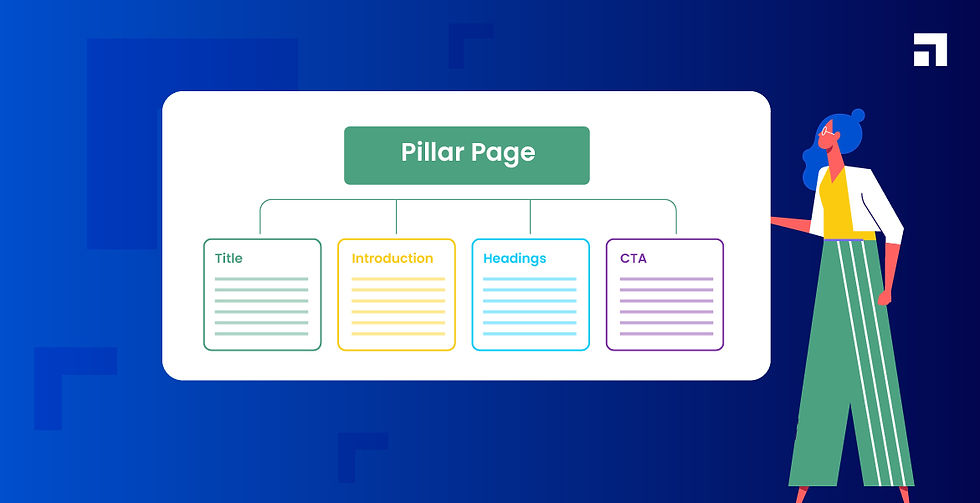
Introduction To Pillar Pages
Understanding pillar pages is essential for an effective content strategy. They serve as the main foundation for your topic clusters. In this section, we will delve into what pillar pages are and their importance.
What Are Pillar Pages?
Pillar pages are comprehensive guides on a specific topic. They cover all aspects of the topic in detail. These pages link to related content, known as cluster content.
Think of them as the hub of a wheel. The hub is the main topic (the pillar page), and the spokes are the related subtopics (cluster content). Pillar pages provide a complete resource on the topic, making it easy for users to find the information they need.
Here are some key characteristics of pillar pages:
● Broad overview of the topic
● Detailed and informative content
● Links to related subtopics
● Well-organized and easy to navigate
Importance Of Pillar Pages
Pillar pages play a vital role in your content strategy. They improve your website's SEO and user experience.
Here are some reasons why they are important:
Benefit | Description
|
Improves SEO | Search engines favor well-structured content. Pillar pages help in ranking higher. |
Enhances User Experience | Users find all information in one place, making navigation easy. |
Boosts Engagement | Comprehensive content keeps users on your site longer. |
Encourages Backlinks | High-quality content attracts backlinks from other sites. |
In summary, pillar pages are the backbone of a well-structured content strategy. They help improve SEO, enhance user experience, and boost engagement.
Understanding Topic Clusters
Topic clusters play a key role in modern SEO strategies. These clusters help organize content, making it easy for search engines to understand and rank your pages. By structuring your content this way, you can boost your site's visibility and improve user experience.
Defining Topic Clusters
A topic cluster is a group of related content. These pieces are linked to one main page, called the pillar page. The pillar page covers a broad topic, while cluster content dives into specific subtopics. For example, a pillar page might be about "Digital Marketing." Cluster content can include "SEO Tips," "Social Media Strategies," and "Content Marketing." Each cluster page links back to the pillar page, creating a web of interrelated content.
Benefits Of Topic Clusters
Topic clusters offer many benefits.
Here are some key advantages:
● Improved SEO: Search engines understand the relationship between your content. This helps in better indexing and ranking.
● Better User Experience: Users find related content easily. This keeps them engaged on your site longer.
● Authority Building: Comprehensive coverage of a topic builds your site's authority. Users see you as an expert in your field.
The table below summarizes these benefits:
Benefit | Description
|
Improved SEO | Better indexing and ranking by search engines. |
Better User Experience | Easy navigation and related content access for users. |
Authority Building | Establishes your site as an expert in the field. |
Implementing topic clusters can transform your website. Start by identifying your main topics and create related subtopics. Link them together to create a cohesive content structure.
Creating Effective Pillar Pages
Creating effective pillar pages helps organize content into topic clusters. This structure enhances SEO, boosts site traffic, and improves user experience.
Pillar pages serve as comprehensive guides on core topics. They help organize content and improve SEO. Creating effective pillar pages involves several key steps. This guide will explore these steps in detail.
Identifying Core Topics
First, identify the main topics for your pillar pages. These topics should be broad and relevant to your audience. They should also align with your business goals. Use keyword research tools to find popular topics. Look at your competitors' content for inspiration. Choose topics that answer common questions. This makes your pillar pages valuable resources.
Structuring Your Content
Structure your content for easy navigation. Start with an introduction to the topic. Break down the topic into subtopics. Use clear headings for each section. Include links to related articles or blog posts. This creates a network of content. Use bullet points and short paragraphs. This makes the content readable.
Add images and infographics for visual appeal. Ensure the page loads quickly. Optimize images and minimize heavy elements. Effective pillar pages require planning and organization. Follow these steps to create content that engages readers and improves SEO.

Building Topic Clusters
Building topic clusters is essential for effective content organization. It enhances your website’s SEO and user experience. By creating topic clusters, you can cover a broad subject comprehensively. This helps search engines understand the relevance and depth of your content. It also provides a seamless journey for your readers.
Choosing Subtopics
Choosing subtopics is the first step in building topic clusters. Start by identifying the core topic you want to cover. Then, brainstorm related subtopics that complement the main topic.
● Research popular keywords.
● Analyze competitors' content.
● Ask your audience for input.
Ensure each subtopic is distinct but related. This helps create a cohesive cluster. For instance, if your main topic is “Digital Marketing,” subtopics might include “SEO,” “Content Marketing,” and “Social Media Strategies.”
Linking Strategies
Effective linking strategies are crucial for building topic clusters. Internal links connect your pillar page to subtopic pages. This structure guides users through related content. It also signals to search engines the importance of your pages.
1. Link from the pillar page to each subtopic page.
2. Ensure subtopic pages link back to the pillar page.
3. Include contextual links between subtopics.
Use descriptive anchor text for links. This improves user experience and SEO. For example, use “Learn more about SEO” instead of “click here.”
Here’s a simple table to summarize linking strategies:
Linking Strategy | Purpose |
Internal Linking | Connects pillar and subtopic pages. |
Contextual Linking | Links related subtopics naturally. |
Descriptive Anchor Text | Improves user experience and SEO. |
Incorporate these strategies for a well-structured topic cluster. This boosts SEO and keeps readers engaged.
Seo Benefits Of Pillar Pages
Pillar pages play a crucial role in any SEO strategy. They serve as the central hub for a particular topic and link to various related content pieces, known as topic clusters. These pages provide several SEO benefits, ensuring your content ranks higher and delivers a better user experience.
Improved Search Rankings
Creating a pillar page helps improve your search rankings. It organizes content around a core topic, making it easier for search engines to understand your content. Search engines prefer well-structured content. They rank it higher because it meets user intent effectively.
A well-designed pillar page attracts more backlinks. Other websites find it valuable and link to it. More backlinks lead to higher domain authority. Higher domain authority results in better search rankings.
Using internal links in your pillar page is essential. Internal links connect the pillar page to related topic clusters. This strategy helps distribute link equity across your site, boosting the rankings of individual pages.
Enhanced User Experience
Pillar pages enhance the user experience on your site. They provide comprehensive information on a single topic. Users find all the information they need in one place, reducing the need to search elsewhere.
Well-structured pillar pages improve navigation. Clear headings and subheadings guide users through the content. Users can easily find the information they seek, leading to longer time spent on your site.
Mobile users benefit from pillar pages too. A clean layout and organized content make it easier to read on smaller screens. This improves user satisfaction and reduces bounce rates.
Here's a quick overview of the SEO benefits of pillar pages:
SEO Benefit | Description |
Improved Search Rankings | Better organization and internal linking boost rankings. |
Enhanced User Experience | Comprehensive and easy-to-navigate content improves satisfaction. |
Increased Backlinks | Valuable content attracts more backlinks. |
In summary, pillar pages and topic clusters offer significant SEO benefits. They improve search rankings and enhance user experience. Implementing them into your strategy is a smart move for better SEO results.
Tools For Creating Pillar Pages
Creating pillar pages requires the right tools. These tools help organize content.
They also ensure everything is easy to find. Let's explore some essential tools.
Content Management Systems
Content Management Systems (CMS) are vital. They help manage and publish content. WordPress is a popular CMS. It offers many plugins. These plugins assist in creating pillar pages. Another good option is HubSpot. It has built-in features for pillar pages and topic clusters. This makes it easy to structure your content.
Seo Software
SEO software helps improve search engine rankings. Tools like SEMrush and Ahrefs are useful. They offer keyword research and content gap analysis. This helps in structuring your pillar pages effectively. Another tool is Yoast SEO. It integrates well with WordPress. Yoast guides you in optimizing your content. This ensures your pillar pages rank higher.
Case Studies
Understanding how pillar pages and topic clusters work can transform your content strategy. Real-world examples give insights into successful implementations. They show lessons learned along the way. This section delves into case studies.
Successful Implementations
Company A saw a 50% increase in organic traffic. They used pillar pages and topic clusters effectively. Their main pillar page focused on digital marketing. Subtopics included SEO, content marketing, and social media. Each subtopic linked back to the main pillar page. This internal linking improved their search engine ranking.
Another example is Company B. They focused on the healthcare industry. Their pillar page covered general health tips. Subtopics included nutrition, exercise, and mental health. This strategy boosted their website traffic by 40%. It also increased user engagement by 35%.
Lessons Learned
Consistency is key. Both companies found regular updates crucial. Fresh, relevant content keeps users interested. It also helps maintain high search rankings.
Internal linking improves user experience. It guides visitors through related topics. This keeps them on the site longer. It also helps search engines understand content relationships.
Keyword research is essential. Targeting the right keywords attracts the right audience. Both companies used data-driven strategies. They researched popular search terms in their industries. This ensured their content met user needs.
Quality over quantity. It's better to have a few well-researched pieces. This outperforms numerous low-quality articles. High-quality content builds authority and trust.

Best Practices
Creating effective Pillar Pages and Topic Clusters can boost your SEO strategy. These structures improve content organization and user experience. Follow best practices to maximize the benefits of this approach.
Regular Updates
Pillar pages need regular updates to remain relevant. Update them with new information or trends. Refresh older content to keep it valuable. Users and search engines favor up-to-date content. Create a schedule for reviewing and updating content. This ensures consistent quality.
Measuring Success
Track the performance of your pillar pages and topic clusters. Use tools like Google Analytics to measure traffic and engagement. Monitor metrics like bounce rates and time on page. These indicators show how well your content meets user needs. Adjust your strategy based on the data collected. This helps in optimizing content for better results.

Frequently Asked Questions
What Are Pillar Pages?
Pillar pages are comprehensive resources on a specific topic. They cover all aspects and link to related content. This helps in organizing information efficiently..
How Do Topic Clusters Work?
Topic clusters consist of a main topic and related subtopics. They link back to the pillar page, improving SEO. This structure enhances content organization.
Why Are Pillar Pages Important For Seo?
Pillar pages improve site navigation and SEO. They help search engines understand your content better. This leads to higher rankings.
How To Create Effective Topic Clusters?
Identify a main topic and related subtopics. Create detailed content for each subtopic. Link them to the pillar page. This improves user experience.
Conclusion
Pillar pages and topic clusters can boost your website's SEO. They organize content, making it easier for users to find information. This strategy also helps search engines understand your site's structure. Implementing it can improve your rankings. .
Start by identifying core topics and creating comprehensive pillar pages.
Then, build clusters of related content. This method is effective and easy to maintain. Try it to enhance your site's visibility and user experience.
Let’s Build Your Success Together
Don’t wait for results to happen—create them. With URDigital Tech, you’re not just getting a service; you’re gaining a partner invested in your success.
Email us at: solutions@urdigitaltech.com
Text us at: (716) 400-0769
Contact us today to see how we can help you turn ideas into impact and opportunities into achievements.


Comments