

How to Measure Customer Lifetime Value Ultimate Guide for Success
- Justin Gleo

- Feb 13, 2025
- 8 min read
Understanding Customer Lifetime Value (CLV) is vital for any business. CLV helps determine a customer's worth over time.
Knowing how to measure CLV can improve your business strategy. It allows you to allocate resources efficiently and enhance customer relationships. By focusing on CLV, you identify your most valuable customers. This knowledge helps in tailoring marketing efforts to retain them.
In this blog, we will explore the steps to measure CLV. You'll learn practical methods and tools to calculate it. Stay tuned to gain insights that can boost your business growth. Let's dive into the world of CLV and make informed decisions for a successful future.

Introduction To Customer Lifetime Value
Customer Lifetime Value (CLV) is a key metric in business. It helps understand the total worth of a customer over the entire period of their relationship with your company. By measuring CLV, businesses can make informed decisions to improve marketing strategies and customer retention efforts.
Importance Of Clv
CLV shows how valuable a customer is over time. This metric helps businesses focus on long-term value rather than short-term gains. Knowing the CLV can guide budget allocation for marketing and sales. It ensures resources are spent on retaining profitable customers.
Understanding CLV also helps in identifying customer segments. Businesses can target high-value customers with personalized offers and services. This boosts loyalty and repeat purchases.
Benefits Of Measuring Clv
Measuring CLV has several benefits. It helps predict future revenue. By knowing the potential income from each customer, businesses can forecast growth and plan accordingly. CLV also aids in optimizing marketing strategies. By focusing on high-value customers, companies can reduce marketing costs and increase ROI.
It helps in identifying the most effective channels and tactics for customer acquisition. Another benefit is improving customer retention. By understanding the factors that influence CLV, businesses can enhance customer experience and satisfaction. This leads to longer relationships and higher profits.

Key Metrics For Clv
Understanding Customer Lifetime Value (CLV) is essential for any business. Knowing how to measure CLV helps in making better marketing decisions. Here, we explore the key metrics for CLV. These metrics are critical for an accurate calculation.
Average Purchase Value
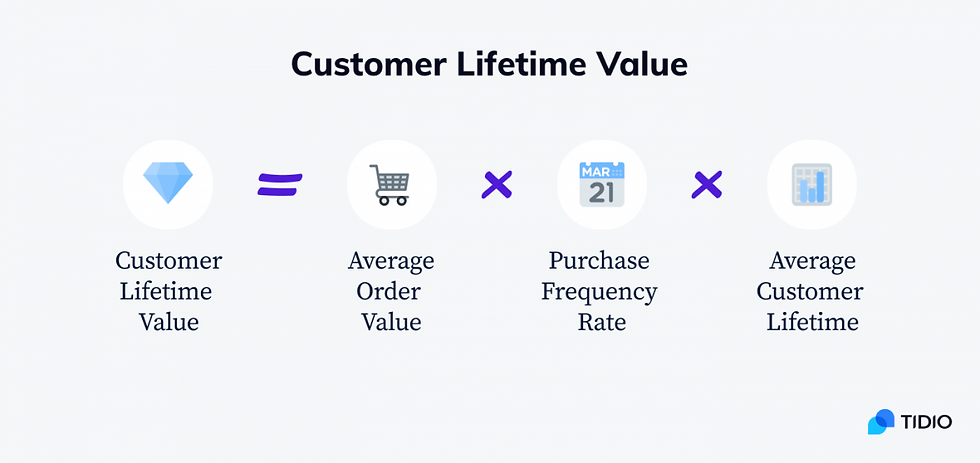
The Average Purchase Value is the amount spent by a customer per transaction. This metric is calculated by dividing the total revenue by the number of purchases. For example, if a customer spends $500 over 5 transactions, the average purchase value is $100. Formula: Average Purchase Value = Total Revenue / Number of Purchases
Purchase Frequency
The Purchase Frequency measures how often a customer makes a purchase. It is calculated by dividing the total number of purchases by the number of unique customers. For instance, if 100 purchases are made by 20 customers, the purchase frequency is 5. Formula: Purchase Frequency = Total Number of Purchases / Number of Unique Customers
Customer Lifespan
The Customer Lifespan is the duration a customer continues to buy from your business. This metric is crucial for understanding how long a customer remains active. It can be calculated by averaging the lifespan of all customers.
If five customers have lifespans of 3, 4, 5, 6, and 7 years, the average customer lifespan is 5 years. Formula: Customer Lifespan = Sum of Customer Lifespans / Number of Customers
Metric | Formula | Example |
Average Purchase Value | Total Revenue / Number of Purchases | $500 / 5 = $100 |
Purchase Frequency | Total Purchases / Unique Customers | 100 / 20 = 5 |
Customer Lifespan | Sum of Lifespans / Number of Customers | (3+4+5+6+7) / 5 = 5 years |
Methods To Calculate Clv
Understanding how to measure Customer Lifetime Value (CLV) is crucial for any business. Two common methods to calculate CLV are the Historical Method and the Predictive Method. Both approaches offer unique insights into customer value over time.
Historical Method
The Historical Method uses past data to calculate CLV. This method is simple and straightforward. It involves summing up all the past purchases of a customer.
● Collect purchase history data.
● Add up all the purchases.
● Divide by the number of customers to get the average CLV.
This method is accurate for short-term insights. It does not account for future spending patterns.
Predictive Method
The Predictive Method estimates future customer value. It uses statistical models and algorithms. This method considers various factors like purchase frequency, average order value, and customer retention rates.
1. Gather data on purchase frequency and average order value.
2. Calculate the retention rate.
3. Use a formula or software to predict future CLV.
The Predictive Method is more complex but offers long-term insights. It helps in making informed business decisions.
Tools For Measuring Clv
Measuring Customer Lifetime Value (CLV) is essential for any business. It helps understand the worth of a customer over time. Several tools can help with this task. Two primary tools are Analytical Software and CRM Systems. These tools provide valuable insights and data.
Analytical Software
Analytical software helps track customer behavior. It provides insights into purchasing patterns. This software can analyze data to predict future behavior. Tools like Google Analytics and Adobe Analytics are popular choices.
They help businesses understand customer interactions. These tools offer detailed reports and visualizations. They make it easier to see trends and patterns. This information is crucial for measuring CLV accurately.
Crm Systems
Customer Relationship Management (CRM) systems store customer data. They track interactions and transactions. Popular CRM systems include Salesforce and HubSpot. These systems provide a comprehensive view of customer history. They help businesses manage customer relationships.
By analyzing this data, businesses can measure CLV effectively. CRM systems also offer automation features. These features can improve customer engagement. They help in building long-term customer relationships.
Segmenting Customers By Clv
Segmenting customers by Customer Lifetime Value (CLV) helps businesses understand which customers bring the most value. By identifying high-value and low-value segments, you can tailor marketing efforts more effectively. This strategy ensures better resource allocation and increased profitability.
High-value Segments
High-value segments consist of customers who contribute significantly to your revenue. These customers purchase frequently and spend more. They often stay loyal for a long time.
To identify high-value segments, consider factors like purchase frequency, average order value, and customer retention rate. These metrics help you understand their buying behavior and preferences.
Strategies for High-Value Segments:
● Offer exclusive promotions and discounts.
● Provide personalized customer service.
● Implement loyalty programs to retain them.
Low-value Segments
Low-value segments include customers who contribute less to your revenue. They may purchase infrequently or spend less. These customers might not stay loyal for long.
To identify low-value segments, analyze their purchase history, average spend, and engagement levels. Understanding these metrics helps you decide how to manage these customers.
Strategies for Low-Value Segments:
● Send targeted marketing campaigns to increase engagement.
● Offer incentives for repeat purchases.
● Identify potential to upsell or cross-sell products.
Strategies To Improve Clv
Customer Lifetime Value (CLV) is a critical metric. It helps businesses understand the long-term value of their customers. Improving CLV can lead to increased profitability and sustained growth. Here are some effective strategies to enhance CLV.
Enhancing Customer Experience
Creating a positive customer experience is vital. Happy customers are more likely to return and spend more.
Here are some ways to enhance customer experience:
● Personalization: Tailor interactions to individual preferences and behaviors.
● Responsive Support: Provide quick and effective customer support.
● Quality Products: Offer high-quality products that meet customer needs.
● User-Friendly Website: Ensure your website is easy to navigate.
● Feedback Mechanism: Encourage and act on customer feedback.
Loyalty Programs
Loyalty programs can significantly boost CLV. They incentivize repeat purchases and foster brand loyalty. Consider implementing these types of loyalty programs:
1. Points System: Reward customers with points for each purchase. Points can be redeemed for discounts or free products.
2. Tiered Rewards: Offer different levels of rewards based on customer spending. Higher tiers provide more exclusive benefits.
3. Referral Programs: Encourage customers to refer friends and family. Offer rewards for successful referrals.
4. Exclusive Access: Provide loyal customers with early access to new products or special events.
Implementing these strategies can help improve CLV. Focus on enhancing customer experience and creating effective loyalty programs. Your business will likely see increased customer retention and higher lifetime value.
Case Studies On Clv
Understanding Customer Lifetime Value (CLV) is crucial for any business. By examining case studies on CLV, we can gain insights into how different companies measure and optimize this important metric. These real-world examples provide a clear picture of strategies that work.
Successful Examples
Several companies have successfully measured and improved their CLV.
Here are a few examples:
● Amazon: Amazon uses customer data to predict future purchases. They focus on enhancing customer experience and loyalty. This approach has significantly increased their CLV.
● Starbucks: Starbucks leverages its loyalty program to track customer spending. By offering personalized rewards, they encourage repeat purchases. This strategy has boosted their CLV.
● Netflix: Netflix analyzes viewing habits to recommend content. This personalized approach keeps customers engaged, increasing their CLV.
Lessons Learned
From these case studies, we can learn valuable lessons:
Lesson | Details
|
Personalization | Personalized experiences enhance customer engagement and loyalty. Use data to tailor your offerings. |
Loyalty Programs | Loyalty programs encourage repeat purchases. Offer rewards that matter to your customers. |
Customer Data | Analyze customer data to predict future behavior. This helps in planning effective marketing strategies. |
By studying these successful examples and the lessons learned, businesses can develop effective strategies to measure and improve their own CLV.
Challenges In Measuring Clv
Measuring Customer Lifetime Value (CLV) is crucial for businesses. Yet, it comes with its own set of challenges. Accurate CLV calculation can be tricky. Various factors play a role, making it a complex task.
Data Accuracy
Data accuracy is vital in measuring CLV. Inaccurate data leads to wrong results. This can affect business decisions. Data can be incomplete or outdated. This impacts the reliability of CLV calculations.
Data collection methods also matter. If the methods are flawed, the data will be too. Accurate customer data is essential. It ensures precise CLV calculations. This helps in making better business strategies.
Changing Customer Behavior
Customer behavior changes over time. This makes CLV measurement difficult. Past behavior does not always predict future actions. Customers may switch brands. They may change their buying habits.
Market trends also affect customer behavior. Economic changes can impact spending. New technologies can shift preferences. All these factors make it hard to measure CLV accurately.
Future Trends In Clv Measurement
Understanding the Future Trends in CLV Measurement is essential for businesses. These trends help in making informed decisions and improving customer relationships. Let's explore some of the emerging trends that will shape the way companies measure Customer Lifetime Value (CLV).
Ai And Machine Learning
Artificial Intelligence (AI) and Machine Learning (ML) are transforming CLV measurement. They provide deeper insights and more accurate predictions.
With AI, businesses can:
● Analyze large data sets quickly
● Identify patterns in customer behavior
● Predict future purchasing trends
Machine Learning algorithms learn from past data. They improve the accuracy of CLV predictions over time. Companies can use these insights to enhance customer engagement and retention.
Personalization Techniques
Personalization is becoming more important in measuring CLV. Tailoring experiences to individual customers can increase their lifetime value.
Some effective personalization techniques include:
1. Customizing marketing messages based on customer preferences
2. Offering personalized product recommendations
3. Using customer data to create unique user experiences
Personalization techniques help in building stronger customer relationships. They lead to higher satisfaction and loyalty, which positively impacts CLV.
In summary, incorporating AI, ML, and personalization techniques into CLV measurement is crucial. These trends will help businesses stay competitive and maximize the value of their customers.

Frequently Asked Questions
What Is Customer Lifetime Value?
Customer Lifetime Value (CLV) is the total revenue a business can expect from a customer throughout their relationship.
How To Calculate Customer Lifetime Value?
To calculate CLV, multiply average purchase value, purchase frequency, and customer lifespan.
Why Is Clv Important?
CLV helps businesses understand customer profitability, allocate resources efficiently, and improve marketing strategies.
What Factors Influence Clv?
Factors influencing CLV include purchase frequency, average order value, customer retention, and customer satisfaction.
Conclusion
Understanding Customer Lifetime Value is crucial for business success. It helps in planning strategies effectively. By measuring CLV, you can focus on retaining valuable customers. This leads to better revenue and growth. Use the discussed methods to calculate CLV accurately.
Keep refining your approach as you gather more data. Remember, a loyal customer base boosts your business significantly. Stay consistent and watch your efforts pay off.
Let’s Build Your Success Together
Don’t wait for results to happen—create them. With URDigital Tech, you’re not just getting a service; you’re gaining a partner invested in your success.
Email us at: solutions@urdigitaltech.com
Text us at: (716) 400-0769
Contact us today to see how we can help you turn ideas into impact and opportunities into achievements.


Comments